
2026 EDITIONExplore essential online privacy practices, understand digital risks, recognize suspicious profiles, and learn how to protect personal information in sensitive online environments.
Your Privacy Matters. Stay Informed and Stay Safe.
Introduction to Discreet Escort Booking and Online Privacy
Discreet Escort Booking is a phrase that people may encounter when researching sensitive online services. However, privacy should never be confused with secrecy, and an attractive website or discreet marketing claim does not guarantee that personal information will remain protected.
In 2026, online privacy is an important consideration whenever people browse websites, communicate with unfamiliar contacts, or share personal information. Websites may collect browsing data, contact details, device information, cookies, and other digital identifiers.
Understanding these risks can help readers make informed decisions about their digital privacy. This educational guide covers seven important privacy principles, including account security, personal information protection, fake profile awareness, suspicious payment requests, and responsible online communication.
The main purpose is simple: understand potential risks before trusting online claims, protect sensitive information, and recognize situations that may threaten personal safety.
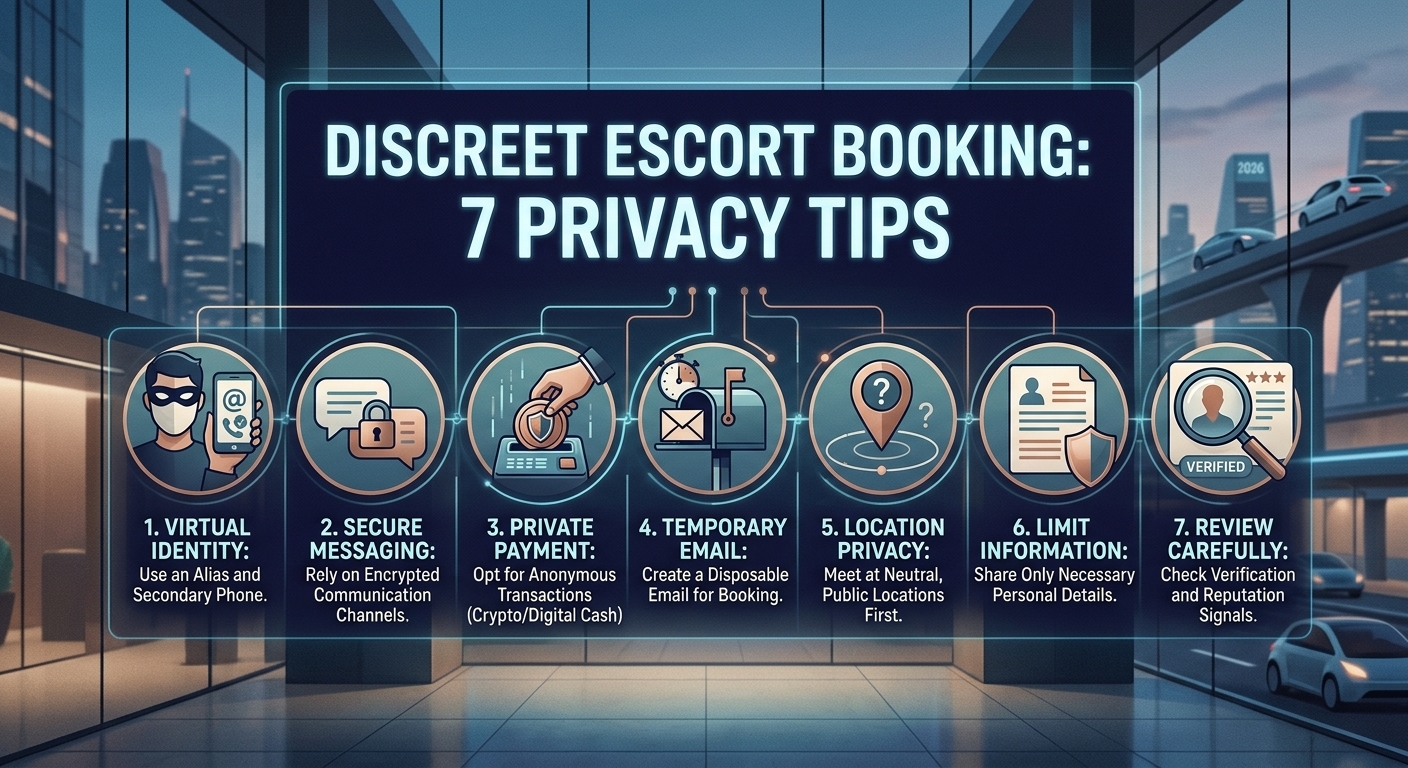
An educational visual about digital privacy, online awareness, and personal information protection.
Table of Contents
- Understand Digital Privacy Before Trusting Online Claims
- Protect Personal and Contact Information
- Recognize Fake Profiles and Misleading Websites
- Use Strong Passwords and Account Security
- Understand Financial Privacy and Scam Risks
- Be Careful With Photographs and Digital Footprints
- Respect Consent, Boundaries and Legal Awareness
- Privacy Protection Checklist
- Online Privacy Risk Comparison
- Frequently Asked Questions
01 Understand Digital Privacy Before Trusting Online Claims
One of the most important Discreet Escort Booking privacy tips is understanding what happens to information after it is shared online.
A website may collect information through contact forms, cookies, analytics tools, embedded content, and third-party services. Even when a website describes itself as private or discreet, that wording does not automatically explain how data is collected, stored, or shared.
Privacy Details Worth Checking
- Does the website provide a clearly written privacy policy?
- Does it explain what personal information is collected?
- Does it identify third-party analytics or advertising tools?
- Does it explain how long personal data is retained?
- Does it provide information about data deletion requests?
Look for understandable privacy information instead of relying only on promotional phrases such as confidential, private, or fully discreet.
02 Protect Personal and Contact Information
Personal information can become exposed when users share more details than necessary. Names, home addresses, workplace information, identity documents, private photographs, and financial information can create risks if they reach an unknown person or unreliable platform.
Digital privacy requires careful attention to the information shared through websites, messaging platforms, email, and social media.
Information That Requires Extra Protection
- National identity documents and passport details.
- Bank account numbers, card details, and passwords.
- Home and workplace addresses.
- Private photographs and personal videos.
- Personal contact details and account recovery information.
Practical Privacy Reminder
Never share banking passwords, verification codes, private documents, or unnecessary personal details with unknown individuals or unverified websites.
03 Recognize Fake Profiles and Misleading Websites
Fake profiles and misleading websites can create serious privacy and financial risks. Some suspicious accounts use copied photographs, fabricated descriptions, false identities, and exaggerated claims to gain attention or collect personal information.
A professional-looking website does not prove that its profiles are genuine. Similarly, attractive photographs do not establish the identity of the person shown.
Common Fake Profile Warning Signs
- Photographs appearing on unrelated websites.
- Different names or descriptions across platforms.
- Unrealistic promises and exaggerated claims.
- Pressure to provide private photographs or documents.
- Requests for unusual payments or verification fees.
- Refusal to explain basic privacy policies.
For a deeper explanation, read our educational article about Identity Fake Profile: Warning Signs and Online Awareness.
It is also useful to understand the broader principles explained in our Online Safety Guide.
04 Use Strong Passwords and Account Security
Strong account security is essential for protecting digital privacy. A weak password or reused login credential can expose personal accounts if another website experiences a data breach.
Whether browsing a regular website or researching sensitive topics, users should follow basic cybersecurity practices.
Seven Account Security Practices
- Create long and unique passwords for different accounts.
- Use a trusted password manager when appropriate.
- Enable two-factor authentication wherever available.
- Never share one-time passwords or verification codes.
- Keep browsers, operating systems, and applications updated.
- Avoid signing in through suspicious links.
- Review account sessions and remove unfamiliar devices.
Remember that legitimate organizations should not ask you to disclose your password or one-time verification code through an informal message.
05 Understand Financial Privacy and Scam Risks
Financial information is particularly sensitive. Fraudulent websites or unknown contacts may use false explanations to request money, payment credentials, or financial documents.
Some scams create urgency by claiming that an unexpected payment is required immediately. Others may promise refunds, special verification, or guaranteed confidentiality without providing credible evidence.
Financial Scam Red Flags
- Requests for gift cards or cryptocurrency transfers.
- Unexpected advance payment demands.
- Requests for banking passwords or card PINs.
- Threats involving private information or photographs.
- Unexplained additional charges.
- Pressure to transfer money immediately.
If You Suspect Financial Fraud
Stop communicating with the suspicious party, preserve relevant evidence, contact your financial institution if payment information may be compromised, and report suspected fraud through appropriate official channels.
06 Be Careful With Photographs and Digital Footprints
Photographs and digital files can contain more information than people realize. Some images may include location metadata, identifiable backgrounds, reflections, or other details that reveal private information.
Once an image is shared online, it may be copied, saved, edited, or distributed without the original owner’s permission. Deleting the original upload does not guarantee that every copy will disappear.
Photograph and Digital Privacy Tips
- Think carefully before sharing identifiable personal photographs.
- Review location permissions on mobile devices.
- Understand image metadata and location-sharing settings.
- Do not publish another person’s photograph without permission.
- Review social media visibility and tagging settings.
- Be cautious about screenshots and forwarded messages.
Respecting image ownership and personal consent is an important part of responsible digital behavior.
07 Respect Consent, Boundaries and Legal Awareness
Privacy is not only a technical issue. It also involves respecting other people’s rights, personal boundaries, and decisions.
No person should be pressured into sharing private information, photographs, documents, or personal details. Consent must be voluntary, informed, and respected.
Responsible Online Behavior
- Respect personal boundaries and individual decisions.
- Never publish private information without permission.
- Do not threaten, blackmail, or harass anyone.
- Avoid content or activities involving exploitation or coercion.
- Understand applicable local laws before engaging with online platforms.
- Report suspected trafficking, exploitation, or serious threats to appropriate authorities.
Online privacy and personal safety should always take priority over promotional claims or marketing labels.
For legal awareness, readers can consult the official Bangladesh Laws Database.
Discreet Escort Booking: 7 Essential Privacy Checks
Use this educational checklist to review your basic digital privacy habits:
- Read the privacy policy before sharing personal information.
- Check whether the website provides transparent ownership information.
- Avoid sharing identity documents and financial credentials unnecessarily.
- Recognize fake profiles, copied photographs, and misleading claims.
- Use unique passwords and two-factor authentication.
- Be alert to suspicious payment requests and financial pressure.
- Respect consent, personal boundaries, and applicable laws.
Online Privacy Risks and Recommended Precautions
The following table summarizes common digital privacy risks and practical precautions.
| Privacy Risk | Possible Problem | Recommended Precaution |
|---|---|---|
| Weak Passwords | Unauthorized account access | Use unique and strong passwords |
| Fake Profiles | Identity deception and fraud | Evaluate information carefully |
| Private Photographs | Unauthorized copying or sharing | Limit image sharing and review permissions |
| Financial Requests | Payment fraud and financial loss | Avoid suspicious transfers |
| Unknown Websites | Unclear data collection practices | Read privacy policies |
| Verification Scams | Account or identity compromise | Never disclose one-time codes |
| Location Exposure | Unwanted disclosure of private locations | Review device location settings |
Frequently Asked Questions (FAQ)
1. What does Discreet Escort Booking mean?
It is an online search phrase commonly associated with privacy-related claims around sensitive service listings. The word discreet does not guarantee confidentiality, authenticity, or safety.
2. Why is online privacy important in 2026?
Websites and digital platforms may collect personal details, browsing information, cookies, and device data. Understanding these practices helps people reduce unnecessary exposure.
3. Can a website guarantee complete privacy?
No website should be assumed to provide absolute privacy. Data collection, third-party services, security practices, and legal requirements can all affect confidentiality.
4. How can I recognize a suspicious online profile?
Look for copied photographs, inconsistent descriptions, unrealistic claims, unusual payment requests, and pressure to share sensitive information.
5. Should I share identity documents with an unknown website?
Avoid sharing identity documents unless there is a legitimate, independently verified reason and a clear understanding of how the information will be protected.
6. What should I do if someone threatens to publish private information?
Do not respond with additional sensitive information or payment. Preserve relevant evidence, secure your accounts, and contact appropriate authorities if you face threats or blackmail.
7. What is the most important online privacy rule?
Think carefully before sharing personal information. Protect passwords, financial credentials, private photographs, and identity documents, and respect the privacy and consent of others.
Related Online Safety and Privacy Resources
Educational Disclaimer
This article is provided for general educational purposes and online privacy awareness only. It does not verify, endorse, or recommend any individual, website, advertisement, or service provider. The information is not legal advice. Readers should protect personal information, respect consent and privacy, and follow applicable laws.
© 2026 Call Girl Service Dhaka. All Rights Reserved.
Online Privacy | Digital Awareness | Personal Safety | Educational Information